
If you’ve ever wished you could get people to actually listen to your ideas (without feeling pushy or manipulative), Influencing Others Positively at Work and in Life might be right up your alley. This course focuses on teaching practical influence and persuasion skills that you can use both in the workplace and in everyday life.
Whether you’re trying to gain buy-in from your team, handle tricky conversations, or just become a more effective communicator, this course promises to give you the tools to influence others in a positive way. The best part? You don’t need any prior experience—just a genuine desire to apply what you learn.
It’s designed for anyone interested in improving their influencing skills, from professionals in sales and marketing to managers, team members, and even people who just want to strengthen their personal relationships.
Instructor Reputation
The course is created by Vertex Learning, a professional training and executive coaching organization with a strong presence on Udemy. With a 4.5 instructor rating, more than 18,000 reviews, and over 36,000 students enrolled across their courses, they’ve clearly built a solid track record. Those numbers matter because they show consistency—this isn’t a brand-new instructor experimenting with their first upload. They’ve worked with thousands of learners and maintained positive feedback over time.
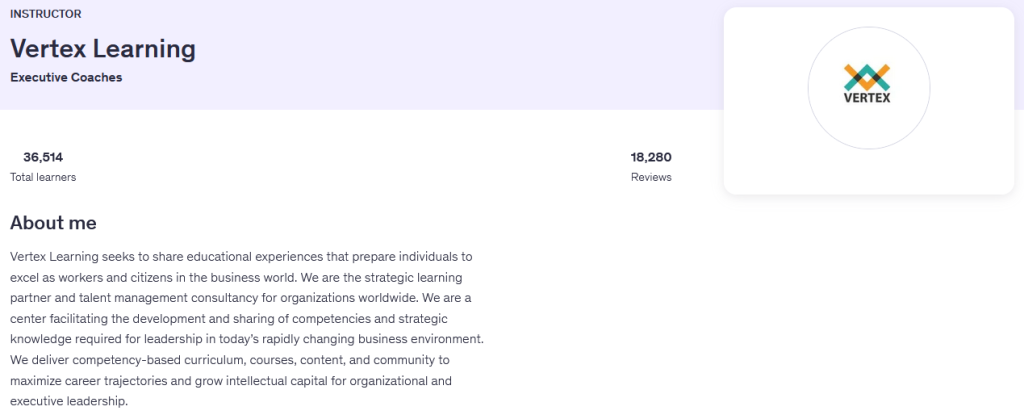
Vertex Learning positions itself as more than just a content creator. They describe themselves as a strategic learning partner and talent management consultancy for organizations worldwide. In practical terms, that means their expertise goes beyond theory—they focus on leadership development, competency-based curriculum, and professional growth in real business environments. That background aligns perfectly with a course centered on influence, persuasion, and negotiation. Influence is a core leadership skill, and having instructors who operate in executive coaching and organizational development adds credibility.
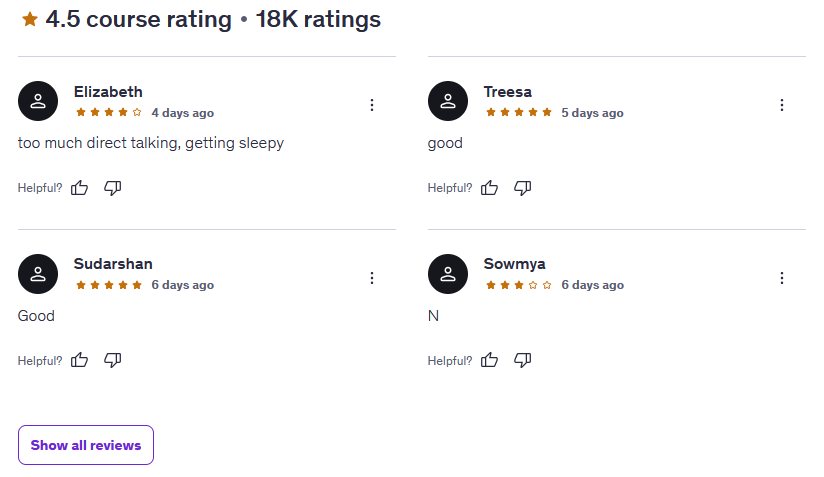
Looking at student feedback, the general tone is positive but honest. Some learners found the course encouraging and reflective, mentioning that it helped them think more deeply about how they influence others in their careers. One reviewer appreciated how it prompted reflection on people who had influenced them positively and inspired them to improve their own approach. Others felt the content was solid but could have gone deeper or been more interactive. That kind of balanced feedback actually boosts trust—when reviews aren’t overly hyped, they tend to feel more genuine.
It’s also worth noting that Vertex Learning’s style leans toward professional and structured rather than flashy or overly casual. You’re not getting entertainment-first content; you’re getting business-focused instruction designed to build competencies. If you prefer high-energy presenters or heavily gamified lessons, this might feel a bit straightforward. But if you value clarity, structure, and professional tone, their approach fits well.
Overall, Vertex Learning brings credibility, experience, and a business-oriented mindset to the table. For a topic like influence—where ethics, mindset, and real-world application matter—a reputable and experienced training organization is a big plus.
Course Structure
The structure of Influencing Others Positively at Work and in Life is built around a simple but powerful idea: influence is not magic, and it’s not manipulation—it’s a skill you can learn, refine, and apply intentionally. The course walks you through the foundations of influence and gradually expands into more practical strategies you can use at work and in everyday interactions.

The course begins by establishing the basics—what influence actually means, how it operates in different environments, and why it plays such a critical role in both professional success and personal relationships. This foundational approach is important because it sets the tone: before jumping into techniques, you first understand the principles behind them.
From there, the course moves into practical influence strategies. You’ll explore methods for gaining commitment from others, encouraging collaboration, and guiding conversations toward productive outcomes. The lessons focus on behaviors, attitudes, and competencies rather than surface-level tricks. That’s a key distinction. Instead of “say this exact phrase and people will obey,” the emphasis is on developing credibility, emotional intelligence, and strategic communication.
Another structural strength is how the course acknowledges influence at all levels of an organization. It’s not just aimed at managers trying to lead teams. The content is relevant whether you’re influencing upward (convincing your boss), laterally (collaborating with colleagues), or downward (guiding team members). This broad applicability makes the material practical for almost anyone in a workplace setting.
The course also touches on persuasion and negotiation skills, blending them into the broader theme of positive influence. These sections are especially useful for people in sales, marketing, business development, or leadership roles. However, the principles are presented in a way that applies just as easily to everyday life—like resolving conflicts, motivating family members, or navigating social dynamics.
In terms of pacing, the course follows a logical progression from theory to application. It’s structured in a way that makes it easy to follow, even if you’re new to the topic. The lessons are concise and focused, which works well for self-paced learners who prefer digestible chunks rather than long, drawn-out lectures.
That said, based on student feedback, the course leans more toward lecture-style instruction than interactive workshops. You won’t necessarily find tons of role-playing scenarios or deep case studies. Instead, it’s designed to provide concepts and frameworks that you’re expected to reflect on and apply independently. For self-motivated learners who like to pause and think about how ideas fit into their own work situations, this structure works well.
Overall, the course structure is clear, organized, and practical. It builds from foundational concepts to actionable strategies in a way that feels coherent and intentional. While it may not be extremely advanced or highly interactive, it provides a strong framework for understanding and practicing positive influence in both professional and personal contexts.
Content Quality
When it comes to content quality, Influencing Others Positively at Work and in Life delivers solid, professional material that stays focused on practical application rather than abstract theory. The course doesn’t try to overwhelm you with complicated psychology jargon or academic frameworks. Instead, it keeps things grounded and actionable—which is exactly what most people want when they’re learning about influence.
One of the biggest strengths of the content is its emphasis on positive influence. The framing is important. Influence here isn’t presented as manipulation or coercion. It’s positioned as a skill built on credibility, communication, emotional awareness, and intentional behavior. That tone matters because it keeps the course aligned with professional ethics and long-term relationship building rather than short-term wins.
The lessons cover influencing, persuading, and negotiating skills in a way that feels interconnected. You’re not just learning random tactics—you’re learning how mindset, behavior, and strategy work together. For example, the course highlights how attitudes and competencies affect outcomes just as much as words do. That broader perspective makes the material more sustainable and realistic.
Another strong point is versatility. The strategies taught aren’t limited to one profession. Whether you’re in sales trying to close deals, in management trying to align your team, or simply someone who wants smoother communication in daily life, the principles apply. Influence shows up everywhere—team meetings, client conversations, performance reviews, even family discussions—and the course does a good job of acknowledging that range.
That said, the depth level feels more beginner-to-intermediate than advanced. If you’re already highly experienced in negotiation theory or leadership psychology, you might find some sections more like reinforcement than brand-new insight. Several students mentioned that they would have appreciated more extensive coverage or deeper dives into certain topics. So while the course is well-structured and practical, it doesn’t necessarily push into highly advanced or research-heavy territory.
In terms of delivery, the content is clear and professional. The explanations are easy to follow, and the material feels organized rather than scattered. However, the course leans more toward lecture-style learning than hands-on exercises. If you learn best through simulations, detailed case studies, or interactive challenges, you may feel that element is somewhat limited. On the other hand, if you prefer absorbing frameworks and then applying them independently in real life, the format works well.
Overall, the content quality is consistent, practical, and aligned with professional development. It may not reinvent the wheel, but it presents influence strategies in a way that is accessible, structured, and immediately usable.
Overall Course Rating – 8/10
Taking everything into account, I would give Influencing Others Positively at Work and in Life a strong 8 out of 10. It’s a well-organized course with practical value, a credible instructor background, and content that delivers on its promise without unnecessary fluff.

What earns it that 8 is its clarity and real-world applicability. The course focuses on skills that genuinely matter—gaining commitment, fostering collaboration, improving persuasion, and understanding how influence works at different organizational levels. It’s especially valuable for professionals who want a structured introduction to influence without diving into overly technical theory.
It doesn’t quite reach a 9 or 10 mainly because of depth and interactivity. Advanced learners may wish for more comprehensive case studies, deeper psychological insights, or more engaging exercises. A bit more interactivity—such as scenario-based practice or reflection prompts built directly into the lessons—could elevate the experience even further.
That said, for beginners and intermediate learners, this course hits the sweet spot. It’s practical, easy to follow, and relevant across industries and personal situations. If your goal is to become more intentional and effective in how you influence others—at work or in life—this course provides a strong, accessible foundation.
In short, it’s not revolutionary, but it is reliable. And sometimes, a reliable and well-structured course is exactly what you need.