
If you’ve ever felt like your emotions run the show (especially anxiety and fear), then “Emotional Intelligence: Master Anxiety, Fear, & Emotions” might already sound like something you need in your life. This course is all about learning how to recognize what you’re feeling, stop emotional spirals before they take over, and actually feel calm and in control — even when life gets messy.
What I liked right away is that this isn’t just about “thinking positive.” It’s about understanding how emotions really work and learning practical techniques to shift them. The promise is bold: you can control your emotional state. And honestly? That’s a pretty empowering idea.
Instructor Reputation
When it comes to credibility, this course has a serious advantage. It’s taught by Joeel A. Rivera and Natalie Rae, the co-founders of Transformation Services — and these two are absolute heavyweights in the personal development space.
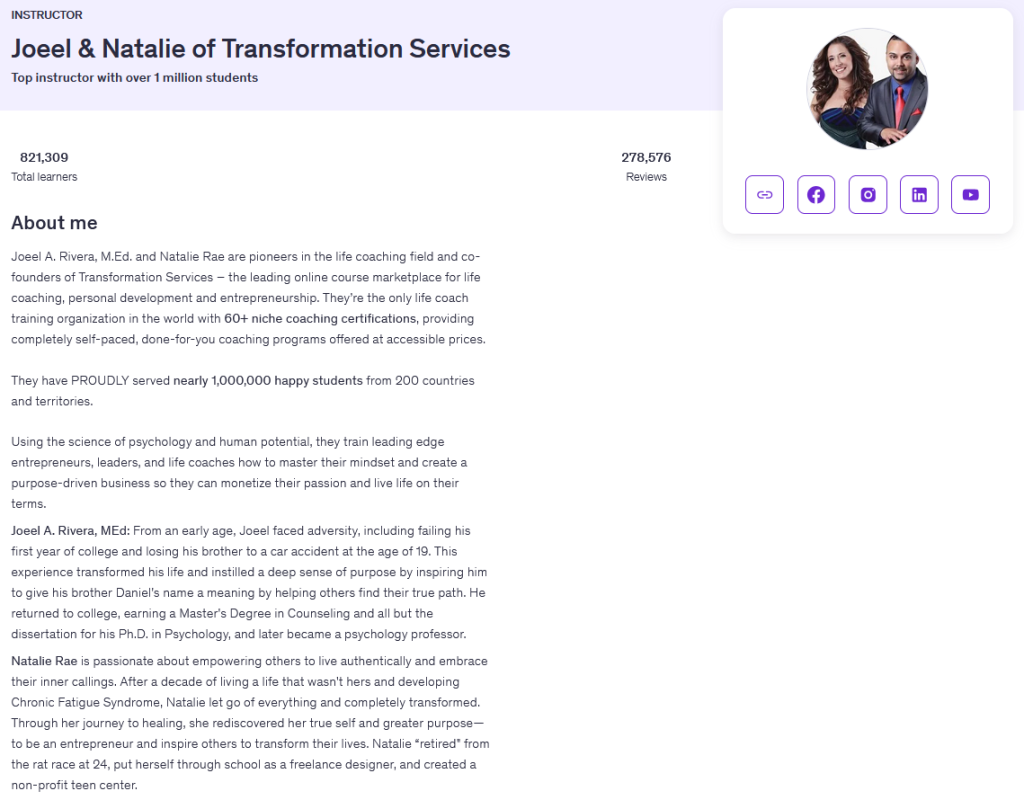
First, let’s talk numbers. They’ve served over 1,000,000 students worldwide, have more than 800,000+ active learners on Udemy alone, and maintain a 4.5 instructor rating across hundreds of thousands of reviews. That’s not beginner-level credibility — that’s long-term trust built at scale. When that many people continue enrolling in your courses, it usually means you’re doing something right.
Joeel brings strong academic authority to the table. He holds a Master’s Degree in Counseling and Education and has completed all but his dissertation for a PhD in Psychology. He’s also a former psychology instructor, which explains why the course feels structured rather than random or overly motivational. His teaching style leans toward educational clarity — he explains why something works, not just what to do. That foundation in psychology shows up clearly in the way emotional intelligence is framed throughout the course.
Natalie complements that with a powerful transformation story and entrepreneurial mindset. After dealing with chronic fatigue syndrome and realizing she wasn’t living authentically, she rebuilt her life from scratch. Her journey into life coaching and personal development adds relatability and emotional depth to the material. She’s not just teaching theory — she understands what it’s like to struggle and reinvent yourself.
Together, they’ve built Transformation Services into one of the largest life coach training marketplaces online, offering dozens of niche certifications. They specialize in mindset, emotional mastery, and helping people build purpose-driven lives. That bigger ecosystem adds weight to this course because it’s not a one-off project — it’s part of a larger body of work focused on human potential.
Another thing worth mentioning is consistency. Some instructors have one great course and then disappear. Joeel and Natalie have over 100+ courses, which means they’ve refined their delivery style over time. They know how to present ideas in digestible chunks. They know how to design exercises. They know how to balance theory and action.
In short, you’re not learning emotional intelligence from someone who skimmed a few psychology books — you’re learning from educators and coaches who’ve spent over a decade teaching, researching, and applying these principles at scale.
Course Structure
The structure of Emotional Intelligence: Master Anxiety, Fear, & Emotions is designed to move you step-by-step from emotional awareness to emotional control — and eventually to emotional empowerment.

Instead of jumping straight into techniques, the course first challenges common myths about emotions. It addresses the confusion many of us grew up with:
- “Emotions are irrational.”
- “You should trust your gut.”
- “Emotions just happen to you.”
By dismantling these beliefs early on, the course creates a mental reset. You’re encouraged to see emotions not as enemies — but as signals that can be understood and directed.
From there, the structure follows a logical progression:
1. Understanding What Emotions Really Are
Before you can manage emotions, you have to understand them. The course explains how emotions are created by the interaction between thoughts, focus, and interpretation. This foundation is critical because it shifts the idea from “I feel anxious and I can’t help it” to “I can observe the thoughts creating this anxiety.”
This section lays the psychological groundwork. It’s not overly academic, but it’s clear and intentional.
2. Recognizing Emotional Triggers in Real Time
Once you understand how emotions are formed, the next step is awareness. You’re taught how to catch emotions while they’re happening — not hours later, not after you’ve already spiraled — but in real time.
This is where mindfulness practices come into play. The course encourages developing the “observer mindset,” where you separate yourself from the emotion and watch it rather than become it. That mental shift alone can be powerful for people who feel hijacked by anxiety or fear.
Worksheets are integrated into this phase. You’ll identify triggers, patterns, and recurring thought loops. The fact that the course requires you to print worksheets shows it’s designed to be interactive, not just passively consumed.
3. Techniques to De-Escalate Anxiety and Fear
This is the practical core of the course. Here you get concrete tools like:
- Thought redirection techniques
- Perspective reframing exercises
- Stress de-escalation methods
- NLP anchoring strategies
- Cognitive interruption tools
The goal isn’t to suppress emotions — it’s to interrupt the escalation process. You learn how to stop racing thoughts, calm your nervous system, and regain control before anxiety spirals out of control.
The NLP components are particularly interesting because they introduce techniques for rewiring emotional reactions and associating positive emotional states with specific triggers.
4. Reframing and Emotional Empowerment
Once you can manage high-intensity emotions, the course shifts into empowerment territory. You learn how to:
- Create feelings of confidence intentionally
- Develop certainty even in uncertainty
- Use humor as a coping tool
- Reframe painful experiences to find hidden growth
This section is about moving from survival to intentional emotional creation. Instead of just managing fear, you’re taught how to generate feelings like hope, motivation, and resilience.
5. Intrapersonal to Interpersonal Intelligence
A subtle but important structural element is the focus on intrapersonal intelligence first. The course emphasizes that understanding and controlling your own emotions is the gateway to understanding others.
While the main focus is self-regulation, it naturally builds a foundation for stronger interpersonal skills. If you’re less reactive and more aware, your relationships tend to improve automatically.
Overall Structural Impression
The course feels intentional rather than thrown together. Each section builds on the last:
Awareness → Recognition → Control → Reframing → Empowerment
It’s paced in a way that allows beginners to follow along without feeling overwhelmed. At the same time, the techniques are practical enough that even someone familiar with self-development can pick up useful tools.
It’s not just about “feeling better” — it’s about understanding the mechanics of emotion so you can take back control. And structurally, the course supports that goal step-by-step rather than expecting instant transformation.
If you actually engage with the exercises instead of just watching the videos, the structure is strong enough to create noticeable shifts in how you handle anxiety, stress, and fear in everyday life.
Content Quality
When it comes to content quality, this course is surprisingly comprehensive without feeling overwhelming. That’s a hard balance to strike, especially in the emotional intelligence space where things can either become too abstract and philosophical — or overly simplified and motivational. Here, the material feels structured, purposeful, and grounded in psychology.
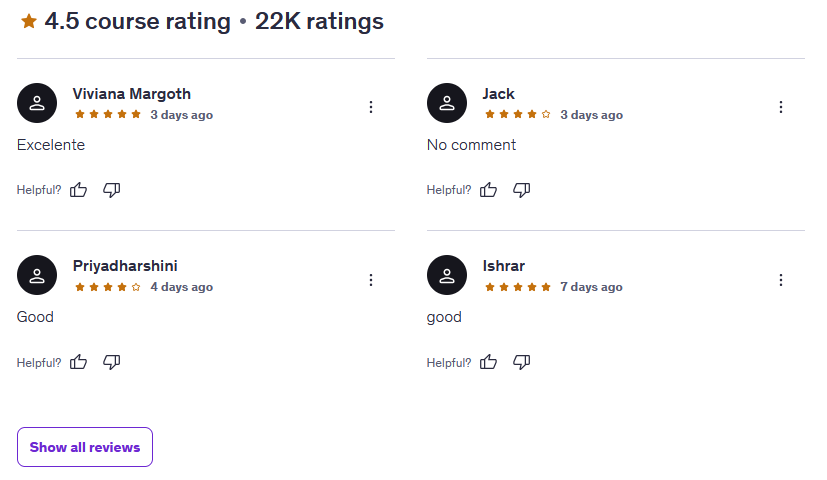
One of the strongest aspects of the content is clarity. Emotional intelligence can be a vague buzzword online, but this course actually breaks it down into understandable parts. You’re not just told to “be more emotionally aware.” You’re shown:
- What emotions actually are
- How thoughts generate emotions
- How focus amplifies certain feelings
- Why anxiety escalates the way it does
- How fear can be interrupted before it spirals
The explanations feel logical rather than mystical. Joeel’s background in psychology shows up in how concepts are layered. Instead of jumping straight into hacks, the course explains the mechanism behind emotions. That makes the tools feel more credible and easier to apply.
Another big strength is practicality. This isn’t passive self-help content where you just nod along and feel inspired for a day. The worksheets, exercises, and reflection prompts push you to apply what you’re learning. You’re encouraged to identify your personal emotional triggers, examine recurring thought patterns, and actively practice reframing techniques.
The course also covers a wide range of tools:
- Mindfulness and observer techniques
- Cognitive reframing strategies
- Stress de-escalation exercises
- NLP anchoring methods
- Confidence-building techniques
- Humor-based emotional shifts
- Methods to stop racing thoughts
The NLP component is particularly interesting. Whether you’re fully sold on NLP or not, the anchoring exercises can be powerful if practiced consistently. The course doesn’t go too deep into technical jargon, which makes it accessible to beginners.
What I appreciate most is the emphasis on empowerment rather than suppression. The message isn’t “don’t feel fear.” It’s “understand fear so you can choose how to respond.” That subtle difference shifts the tone from toxic positivity to emotional mastery.
In terms of production quality, the course feels polished. The instructors are experienced on camera, their delivery is calm and confident, and the pacing is steady. It doesn’t feel rushed. It doesn’t feel improvised. It feels like material that has been taught and refined many times before.
If there’s any limitation, it’s that some of the techniques (like mindfulness and reframing) may be familiar if you’ve already studied CBT, meditation, or personal development extensively. However, for most learners — especially those new to emotional intelligence — the content is well-organized, practical, and genuinely actionable.
Overall, the quality is consistent, credible, and usable in real life. And in a topic like anxiety and fear, usability matters more than inspiration.
Overall Course Rating – 9/10
If I had to put a number on it, I’d give Emotional Intelligence: Master Anxiety, Fear, & Emotions a solid 9 out of 10. It’s not perfect, but it delivers real value — especially for anyone actively struggling with anxiety, stress, or emotional overwhelm.

This course stands out because it combines three important elements: credibility, clarity, and practicality. The instructors have the academic background and real-world coaching experience to make the material trustworthy. The structure makes emotional intelligence feel understandable rather than abstract. And the tools are practical enough that you can start applying them immediately.
Where it really shines is in helping people feel empowered. The core message — that you can control your emotional state — is both bold and motivating. For someone who feels like their emotions are constantly “happening to them,” that shift in perspective alone can be life-changing.
It’s especially valuable if you:
- Struggle with anxiety or racing thoughts
- Feel overwhelmed by uncertainty
- Want structured tools rather than vague advice
- Work in a helping profession and want techniques for clients
- Feel emotionally reactive and want more control
The only reason it’s not a perfect 10 is that seasoned psychology students or advanced practitioners might find some sections familiar. It’s designed to be accessible, which means it doesn’t go extremely deep into clinical theory. But honestly, that accessibility is part of its strength.
For the average learner — or even someone who has dabbled in personal development before — this course offers a strong framework for understanding and directing your emotions. If you actually practice the exercises instead of just watching the videos, you’re likely to notice real improvements in how you handle stress and fear.
In short, it’s practical, empowering, and well-delivered — and for many people, it could be the missing piece in finally feeling emotionally in control.