
If you’ve ever found yourself wondering “Why is my kid reacting like this?” or “Am I totally messing this up?” — you’re definitely not alone. Neuroscience for Parents: How to Raise Amazing Kids is one of those courses that instantly makes you feel seen as a parent. Instead of handing out generic parenting advice, it digs into how your child’s brain actually works and why their behavior makes sense (even during those full-on battlefield moments).
The course promises to help you raise confident, emotionally balanced kids while keeping your own sanity intact — and surprisingly, it delivers without being preachy or overwhelming. Whether you’re parenting a newborn or a teenager, this course is clearly designed to meet you where you are.
Instructor Reputation
One of the biggest reasons this course works so well is the credibility and experience behind it. Gregory Caremans isn’t just another online instructor sharing opinions — he’s someone who has genuinely lived and worked in the world of brain science for years. He has formal training in psychology, a master’s degree in communication, and previously served as Director of the Institute of Neurocognitivism in Brussels. That mix of science and communication is exactly what you want in a course like this.
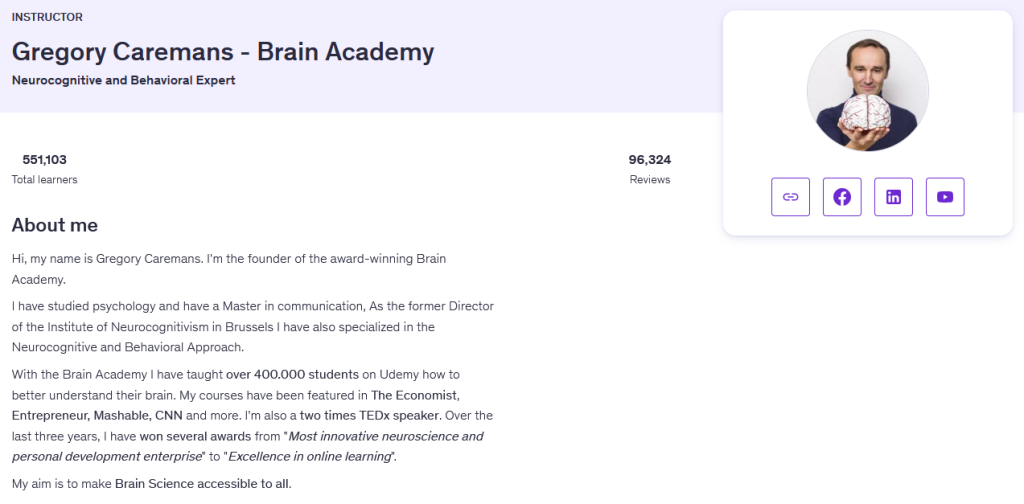
Gregory is also the founder of the Brain Academy, an award-winning learning platform that focuses on making brain science accessible to everyday people. This isn’t a side project or a one-off course — it’s a long-term mission. Over hundreds of thousands of students have taken his Udemy courses, many of which are #1 bestsellers in their categories. That kind of track record doesn’t happen by accident.
What really sets him apart, though, is how human he feels as an instructor. He’s very open about being a father himself, and that perspective shows up constantly in the course. Instead of sounding like a distant academic, he comes across as someone who understands the emotional chaos, guilt, frustration, and love that come with parenting. He regularly uses real-life examples, stories from his own family, and relatable parenting moments to bring the science to life.
On top of that, his work has been recognized well beyond Udemy. He’s a TEDx speaker, has been featured in major media outlets, and has collaborated on UNICEF-backed projects. The Brain Academy is also connected to serious research institutions, including contributions to brain research initiatives. All of this builds a strong sense of trust — you feel confident that the information isn’t trendy parenting advice, but well-researched, thoughtful guidance grounded in science.
Course Structure
The course structure of Neuroscience for Parents: How to Raise Amazing Kids is clearly designed with busy, overwhelmed parents in mind. From the very beginning, Gregory makes it clear that no prior knowledge is required, and he truly means it. He starts with foundational concepts about how the brain works and gradually builds toward more complex ideas, without ever making you feel lost or behind.

One of the smartest structural choices is how the course follows a child’s development over time — from newborns to teenagers and young adults. This makes the course incredibly practical, because you can either go through it start to finish or jump straight to the age range that’s most relevant to your family right now. Either way, everything still connects and makes sense.
Lessons are broken down into manageable segments, so you don’t feel overwhelmed by long lectures. Each section focuses on a specific theme, such as stress, emotional reactions, communication, self-esteem, learning, or behavioral challenges. Gregory first explains what’s happening in the child’s brain during these moments, then connects that understanding to how parents can respond more effectively.
Another strong point is how theory and real life are constantly linked. The neuroscience is never presented in isolation — it’s always tied back to everyday parenting situations, like meltdowns, sibling conflicts, school stress, or moments when you feel like you’re about to lose your patience. This makes the learning stick, because you can immediately recognize these patterns in your own household.
Beyond the video lectures, the course also has a very active and supportive structure. Questions are answered quickly, often within a day, and the Q&A section itself becomes a valuable learning resource. Gregory also sends out regular educational announcements with extra insights, blog posts, and updates, which makes the course feel alive rather than static. Over time, new lectures are added, so enrolling once gives you ongoing value instead of a “one-and-done” experience.
Overall, the structure feels thoughtful, flexible, and genuinely designed to help parents learn at their own pace — whether they’re squeezing in lessons during nap time or watching late at night after a long day.
Content Quality
The content quality in Neuroscience for Parents: How to Raise Amazing Kids is where this course truly earns its reputation. From start to finish, the material feels intentional, well-researched, and clearly shaped by years of hands-on experience in both neuroscience and parenting. Instead of relying on trendy parenting buzzwords, the course consistently anchors its lessons in brain science, behavioral research, and psychology — but without ever feeling heavy or academic.
A major strength is how the neuroscience is translated into everyday parenting language. Concepts like stress responses, emotional regulation, brain modes, and developmental stages are explained in a way that feels intuitive rather than intimidating. Gregory takes the time to explain why children react the way they do before ever jumping into what parents should do about it. That shift alone can dramatically change how you interpret your child’s behavior, especially during difficult moments.
The course excels at helping parents remain calm and grounded when things go sideways. Rather than promising perfect behavior or magical fixes, it gives you realistic tools to recognize when your child’s brain is under stress and how to respond without escalating the situation. This is particularly valuable for parents who feel stuck in cycles of frustration, guilt, or constant conflict.
Another standout aspect of the content is its focus on self-esteem and worldview development. Instead of shallow confidence-boosting tips, the course explains how self-esteem is built over time through trust, consistency, and emotional safety. You also get insight into how children form their understanding of the world — and how parenting choices, often unintentionally, shape that process.
Learning and study skills are also addressed through a brain-based lens. Rather than pushing productivity hacks, the course explains how children actually absorb and retain information, making the advice more sustainable and less stressful. Add in sections on bullying, peer pressure, communication, and nurturing natural talents, and you end up with content that feels both comprehensive and deeply relevant to real family life.
If there’s one minor limitation, it’s that the course focuses more on understanding and frameworks than on rigid, step-by-step scripts. Some parents may want more “say this exact sentence” examples. However, the upside is that what you learn can be adapted to different personalities, ages, and family dynamics instead of forcing a one-size-fits-all solution.
Overall Course Rating – 9/10
All things considered, Neuroscience for Parents: How to Raise Amazing Kids easily earns a 9 out of 10, and that rating feels well-deserved once you spend time with the material. The course offers a rare balance of scientific credibility, practical relevance, and emotional reassurance for parents who genuinely want to do better — not just follow rules.

What makes this course stand out is its ability to change how you think about parenting rather than just telling you what to do. By understanding how your child’s brain works, everyday challenges feel less personal and less overwhelming. That alone can reduce stress, improve communication, and strengthen the parent-child relationship in meaningful ways.
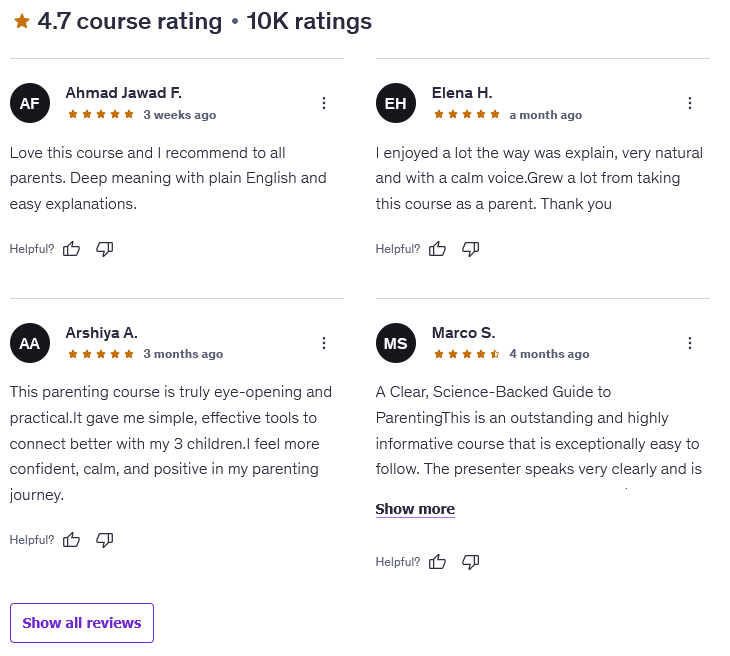
The instructor’s delivery plays a big role in the high rating. The tone is warm, encouraging, and respectful, which makes it easier to absorb complex ideas without feeling judged or inadequate. The course also provides long-term value, with active instructor engagement, frequent updates, and a growing library of content that continues to expand after enrollment.
The only reason it doesn’t score a perfect 10 is that some parents may want even more tailored examples for specific personalities or family situations. Still, that’s a small trade-off for a course that prioritizes understanding over rigid rules.
If you’re a parent or grandparent looking for science-backed guidance that feels supportive, empowering, and genuinely useful in daily life, this course is absolutely worth your time — and very likely to change how you approach parenting for the better.