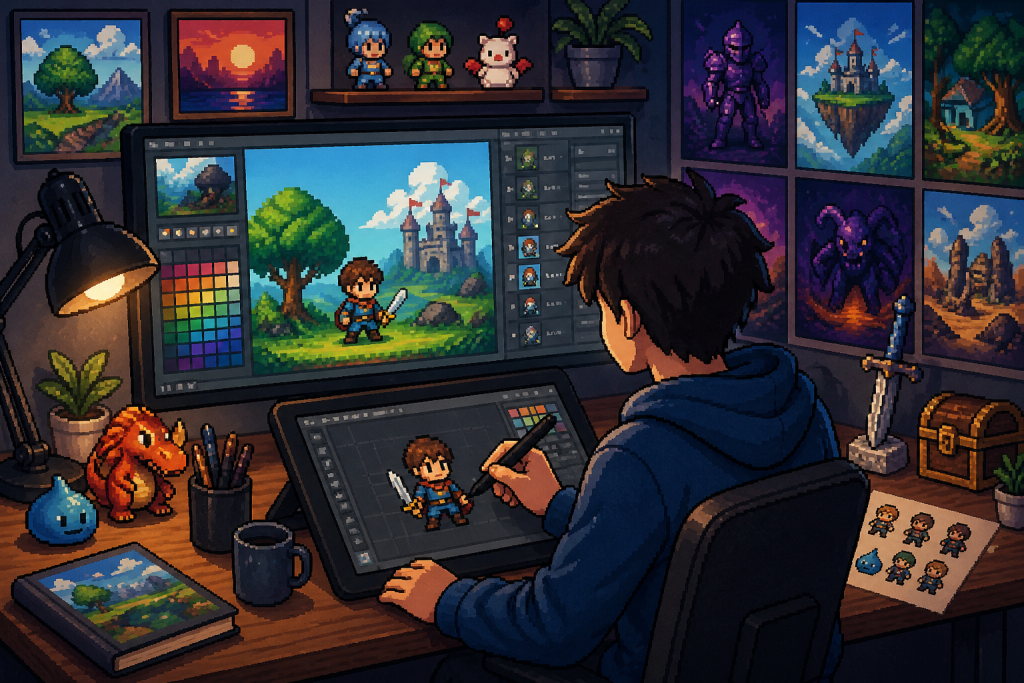
If you’ve ever looked at retro-style games and thought, “I wish I could make art like that,” then Pixel Art Master Course – Beginner to Professional/Freelance is basically designed for you. This course promises to take you from absolute beginner to someone who can not only create polished pixel art but also potentially earn from it—and honestly, that’s a pretty bold claim.
The course covers a ton of ground: from basic shapes and color theory all the way to animation, game assets, and even freelancing. It’s not just about drawing tiny pixels—it’s about understanding how pixel art fits into actual game development. Whether you’re aiming to build your own indie game or start a side hustle as a pixel artist, this course tries to bridge that gap between hobby and profession.
Instructor Reputation
The course is led by Mislav Majdandžić, and honestly, his reputation is one of the biggest reasons this course stands out from the crowded pixel art space on Udemy. He’s not just someone who learned pixel art and decided to teach it—he’s an active professional, a game artist, and the CEO of his own studio. That real-world experience shows up constantly throughout the course, especially in how he connects art skills with actual game development and freelancing opportunities.
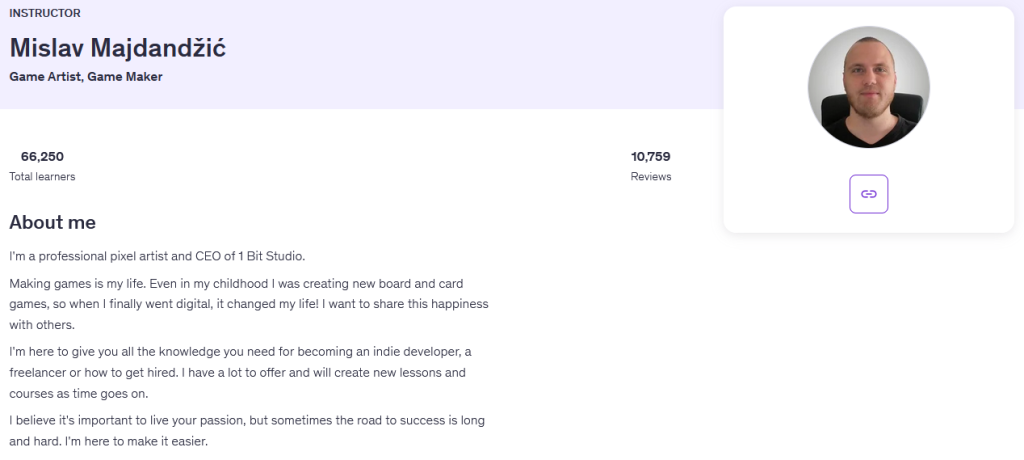
Looking at the numbers alone, he’s clearly doing something right. With a 4.8 instructor rating, over 10,000 reviews, and more than 66,000 students, he’s built a strong track record. But beyond the stats, what really matters is how he teaches—and this is where he shines. Students consistently mention that he doesn’t just tell you what to do; he explains the reasoning behind it. That approach helps you build actual artistic intuition instead of just following step-by-step instructions blindly.
One of the most impressive aspects of his reputation is his level of engagement. He’s extremely active on both Udemy and Discord, which is something you don’t always get with large courses. He regularly gives feedback, answers questions, and even hosts live sessions or streams. That kind of accessibility can make a huge difference, especially for beginners who might feel stuck or unsure about their progress.
Another thing worth highlighting is how much students trust his teaching style. Many reviews talk about going from zero experience to confidently creating pixel art they’re proud of. Others mention how the course helped them overcome creative blocks or even influenced their career direction. That kind of feedback suggests that his teaching isn’t just informative—it’s motivating.
He also emphasizes growth and persistence, which comes through in both his course content and his communication style. Instead of presenting pixel art as something you either “have talent for” or don’t, he treats it as a skill that can be developed step by step. That mindset is especially helpful for beginners who might feel intimidated at first.
Overall, his reputation isn’t just built on ratings—it’s built on consistent results, active support, and a teaching style that genuinely helps people improve. If you’re someone who values having a responsive instructor and a strong learning community behind you, that alone makes this course a compelling option.
Course Structure
The Pixel Art Master Course – Beginner to Professional/Freelance is one of those courses that clearly wasn’t thrown together quickly. It’s thoughtfully structured, incredibly detailed, and designed to guide you from absolute beginner all the way to a professional level—at your own pace.
The course is divided into three major sections: Beginner [B], Intermediate [I], and Advanced [A]. This tiered system is simple but very effective. Each lesson is labeled with its difficulty level, so you always know what you’re getting into. If you’re brand new, you can comfortably stay within the beginner section without feeling overwhelmed. If you already have some experience, you can jump ahead or move faster through the earlier parts.
The beginner section focuses heavily on fundamentals, which is exactly where most people need to start—even if they don’t realize it. You’ll learn about lines, shapes, shading, and color theory, all tailored specifically for pixel art. These lessons lay the groundwork for everything that comes later, and the course does a great job of reinforcing these concepts through practical exercises.
As you move into the intermediate section, things start to get more exciting and complex. This is where you’ll begin working on actual game assets—characters, environments, items, and more. You’ll also start exploring different genres like RPGs, platformers, and top-down games. This variety is important because it exposes you to different styles and challenges, helping you figure out what kind of pixel art you enjoy most.
The advanced section takes things even further by diving into animation, polishing techniques, and more professional-level workflows. Pixel animation, in particular, is handled really well. Instead of overwhelming you, the course breaks it down into manageable steps, making something that seems difficult feel approachable.
One of the standout features of the course structure is its project-based approach. You’re not just watching lectures—you’re constantly creating. By the time you finish, you’ll have worked on multiple projects that can be used in a portfolio. That’s a huge advantage if your goal is to land freelance work or contribute to game development projects.
Speaking of freelancing, the course also includes dedicated sections on the business side of pixel art. You’ll learn where to find clients, how to communicate with them, and how to price your work. This is something many art courses skip entirely, so having it included here adds a lot of real-world value.
Another major component is the community integration. The course isn’t just a series of videos—it’s connected to a Discord server with thousands of members. This allows you to share your work, get feedback, collaborate on projects, and even join game jams. In a way, the course structure extends beyond the lessons themselves and into an ongoing learning environment.
It’s also worth mentioning that the course is constantly evolving. It started with around 60 videos and has grown to over 200, with more being added regularly. That means the structure isn’t static—it adapts and expands over time. Upcoming content, like real-world project showcases and game releases, adds even more depth to the learning experience.
Overall, the structure of this course is one of its biggest strengths. It’s organized, comprehensive, and flexible enough to support beginners while still offering plenty of depth for more advanced learners. Whether you’re learning for fun, building a game, or aiming to freelance, the way this course is laid out makes it easy to stay on track and keep improving.
Content Quality
The content quality in Pixel Art Master Course – Beginner to Professional/Freelance is where this course really starts to separate itself from a lot of other pixel art tutorials out there. It’s not just “good”—it’s deep, practical, and clearly built with long-term learning in mind. You can tell pretty quickly that this isn’t a rushed course or a collection of random lessons stitched together. There’s a clear progression, and more importantly, a clear intention behind every section.
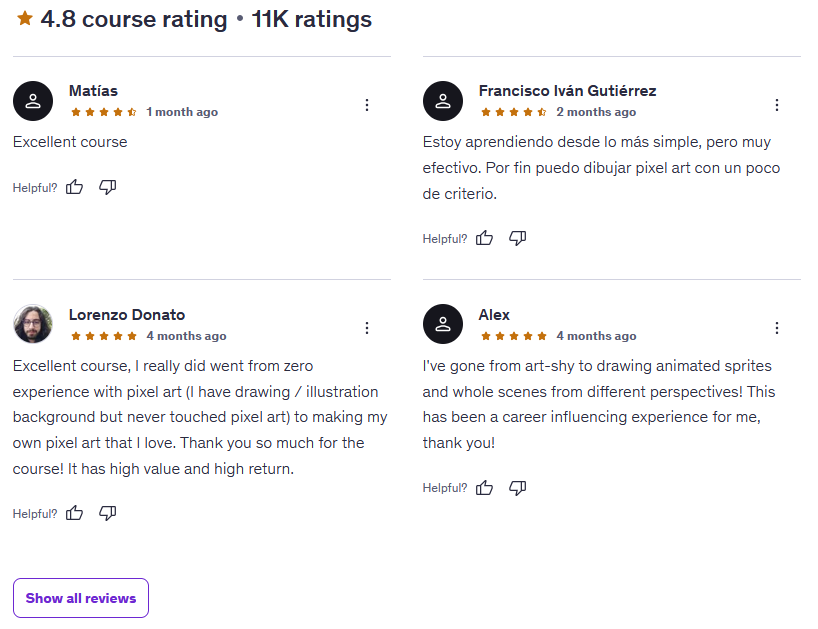
One of the biggest strengths is how well the course balances theory and application. A lot of beginner art courses either overwhelm you with theory or skip it entirely and jump straight into drawing. This course finds a really solid middle ground. Concepts like color theory, shading, and composition are explained in a way that’s easy to understand—but then you immediately apply them to actual pixel art projects. That combination helps the knowledge stick instead of just going in one ear and out the other.
Another standout aspect is how complete the content feels. You’re not just learning how to draw a character or a sprite—you’re learning how to build entire game-ready assets. The course covers objects, environments, characters, UI elements, and animations across different game genres. That variety is huge because it prevents you from becoming too narrow in your skillset. By the end, you’re not just good at one thing—you’re adaptable.
The animation content deserves a special mention. Pixel animation can be intimidating, especially if you’re new to art in general. But here, it’s broken down step-by-step in a way that feels manageable. You start small and gradually build up to more complex animations, which makes the learning curve feel a lot less steep. It’s the kind of progression that quietly builds your confidence as you go.
Another thing that really boosts the content quality is the real-world relevance. This isn’t just about making art that looks nice—it’s about making art that works in actual games. The course constantly ties back to game design principles, showing how your art choices affect gameplay, readability, and player experience. That’s something many courses overlook, and it adds a lot of professional value here.
Then there’s the freelancing and career-focused content, which adds another layer of depth. Learning how to create pixel art is great, but learning how to sell your skills is what makes this course practical. The lessons on finding clients, communicating effectively, and pricing your work feel grounded and realistic—not just generic advice.
The ongoing updates also play a big role in content quality. The course has grown from around 60 videos to over 200, and it’s still expanding. That means you’re not stuck with outdated material—the content evolves along with the industry and the instructor’s own projects. The addition of real-world case studies (like applying pixel art principles to actual game development) makes the course feel alive rather than static.
If there’s any downside, it’s that the sheer amount of content can feel overwhelming at times. Beginners might not always know which parts to prioritize, especially early on. But the structured sections help with that, and the ability to learn at your own pace offsets the issue quite a bit.
Overall, the content quality is extremely high—detailed, practical, and constantly improving. It’s the kind of course where you’re not just consuming information, you’re actively building a skillset that can translate into real projects and even income.
Overall Course Rating – 9.2/10
When everything is taken into account—the depth of content, the instructor’s involvement, the practical focus, and the strong community backing—it’s easy to see why this course stands out. I’d confidently give Pixel Art Master Course – Beginner to Professional/Freelance a 9.2/10, and that score reflects just how well-rounded and valuable the overall experience is.
What really pushes the rating into the 9+ range is how complete the course feels. It doesn’t just teach you pixel art in isolation—it walks you through the entire journey. You start with the basics, build up your skills step by step, create real projects, and even learn how to turn those skills into something profitable. That kind of end-to-end approach is rare and incredibly valuable, especially if you’re serious about pursuing pixel art beyond just a hobby.
Another major factor is the support system built around the course. Between the instructor’s active involvement and the Discord community, you’re never really learning alone. You can get feedback, ask questions, and even collaborate with others. That ongoing support makes a big difference in how quickly you improve and how motivated you stay.
The course also benefits a lot from its continuous updates. It doesn’t feel outdated or abandoned—instead, it feels like something that’s actively growing. Knowing that new lessons and improvements are being added over time makes the investment feel much more worthwhile.
That said, it’s not completely perfect. The biggest drawback is the time commitment required. This isn’t a quick, casual course you can breeze through in a weekend. It’s dense, and to really get value from it, you need to put in consistent effort. For some people, that might feel a bit overwhelming—especially if they’re just looking for a quick introduction.
Still, that “downside” is also part of what makes the course so good. It’s detailed because it needs to be. It’s comprehensive because it’s aiming to take you from beginner to professional.
In the end, if you’re genuinely interested in pixel art—whether for game development, freelancing, or personal projects—this course is easily one of the best options available. It’s not just about learning a skill; it’s about building something you can actually use, and that’s what makes it worth the high rating.